Skill moze uzywac rzymskiej armi bez strat morali itd...
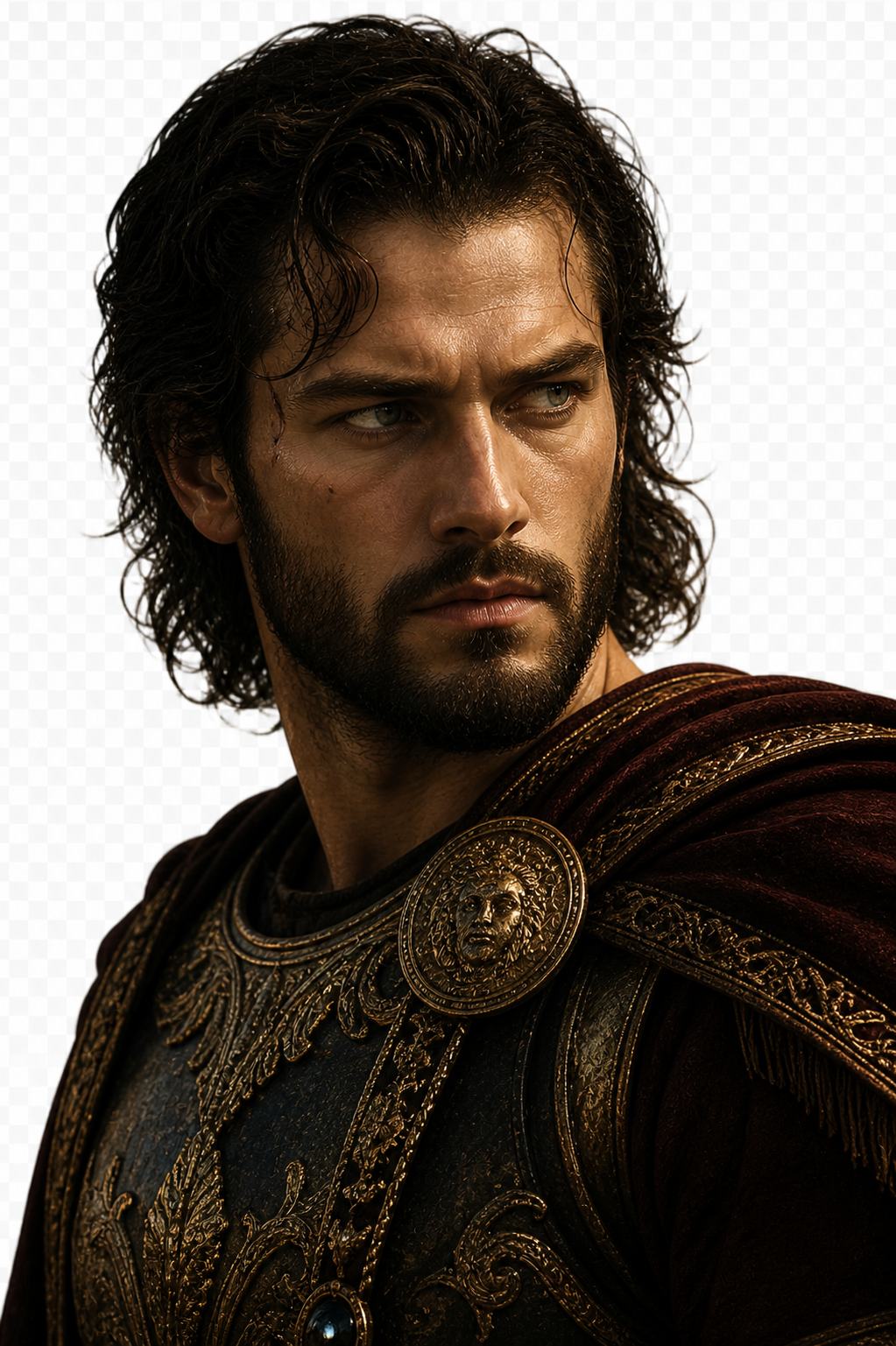
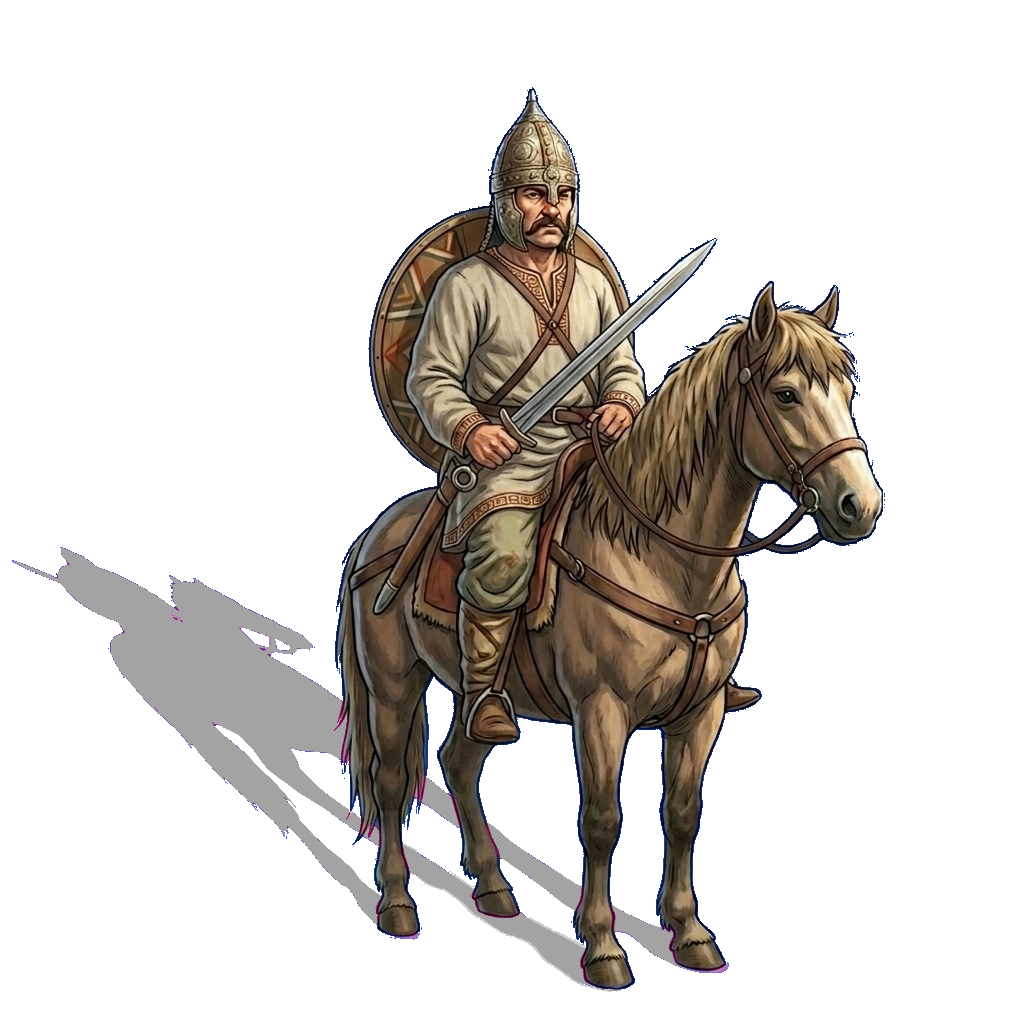
Aelius Peregrinus represents the class of Sarmatian leaders who entered into the service of the Roman Empire during the 2nd and 3rd centuries CE. Following the Marcomannic Wars, thousands of Sarmatian heavy cavalry were settled in Britain and other provinces to serve as 'numeri' or auxiliary units. Peregrinus, a name often adopted by those seeking Roman citizenship, embodies the cultural fusion between the horse-lords of the steppes and the disciplined Roman frontier administration. As a commander of Sarmatian 'cataphracts,' he would have worn the characteristic scale armor and carried the 'contus'—a massive two-handed lance. His depiction highlights the transition from a nomadic life to a Roman officer, featuring a mix of steppe-style clothing and Roman military insignia, reflecting a man who belongs to two very different worlds.
Banadaspus was a king of the Iazyges, a powerful branch of the Sarmatian people, during the 2nd century CE. He is known for his attempts to make peace with the Roman Emperor Marcus Aurelius, a move that led to his downfall as his own people, eager to continue their raids, deposed and imprisoned him. This internal conflict illustrates the fractured and fiercely independent nature of the Sarmatian tribes. Banadaspus represents the pragmatic side of nomadic leadership, recognizing the overwhelming power of the Roman legions while struggling to maintain authority over his warriors. His appearance is that of a classic steppe noble, with a felt cap, a long tunic, and eyes that reflect the burden of a leader caught between the demands of his people and the reality of a global empire.
Skill moze uzywac greckiej armi bez strat morali itd...
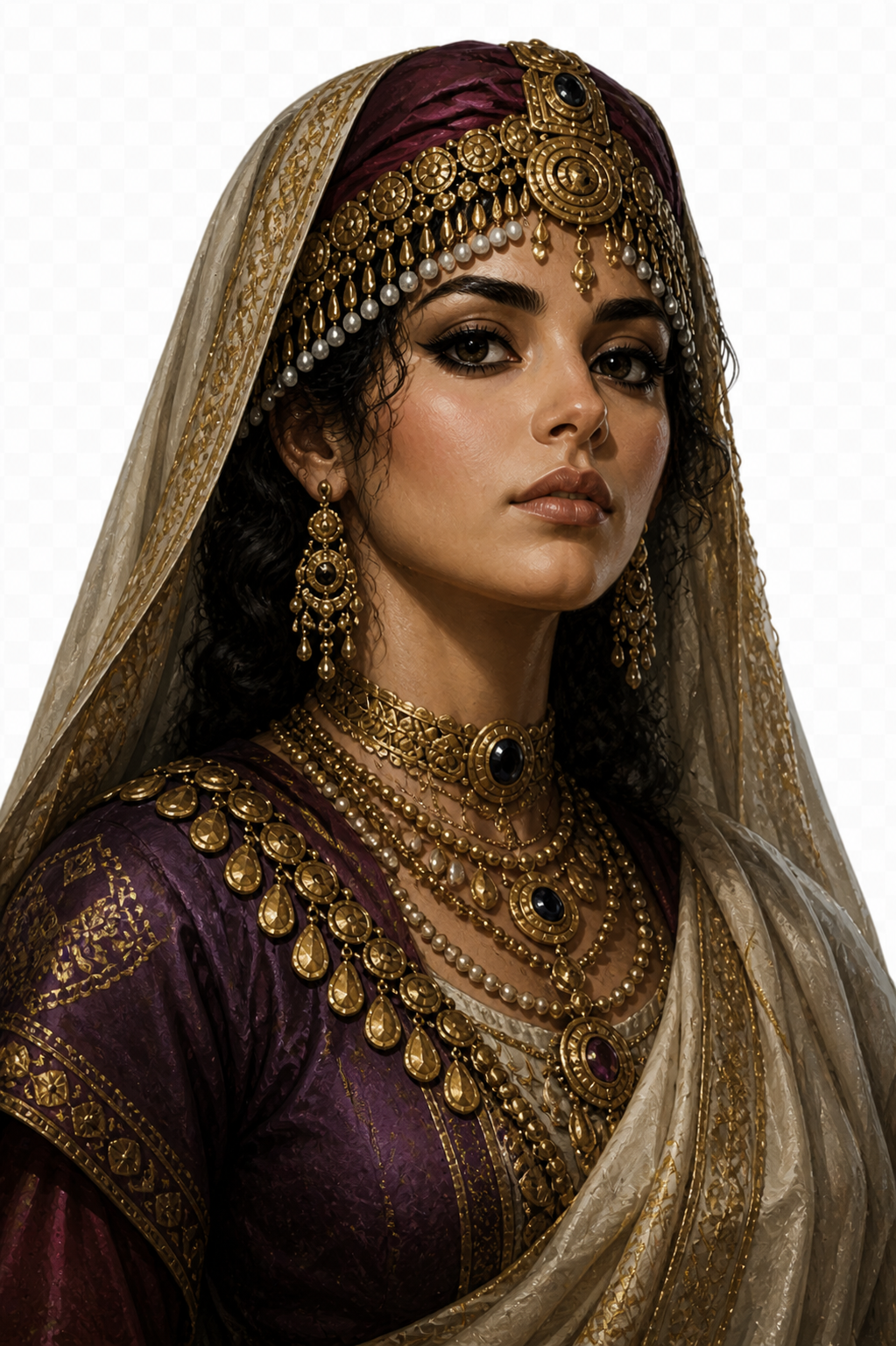
Septimia Zenobia was the Queen of the Palmyrene Empire who famously challenged the authority of Rome during the 3rd century. While she ruled a desert city-state, her armies were heavily composed of cataphracts and archers that utilized Sarmatian and Persian-style tactics. Zenobia was a highly educated leader who spoke multiple languages and claimed descent from Cleopatra. She conquered Egypt and much of Asia Minor before being defeated by Emperor Aurelian. In the context of the Sarmatian world, she represents the pinnacle of Eastern nomadic military influence on settled civilizations. Her portrayal is one of regal majesty and military command, often shown wearing a jeweled crown alongside a scale-mail breastplate, symbolizing her role as a warrior queen who briefly forged a third power in the ancient world.
Skill bonus do amazonek
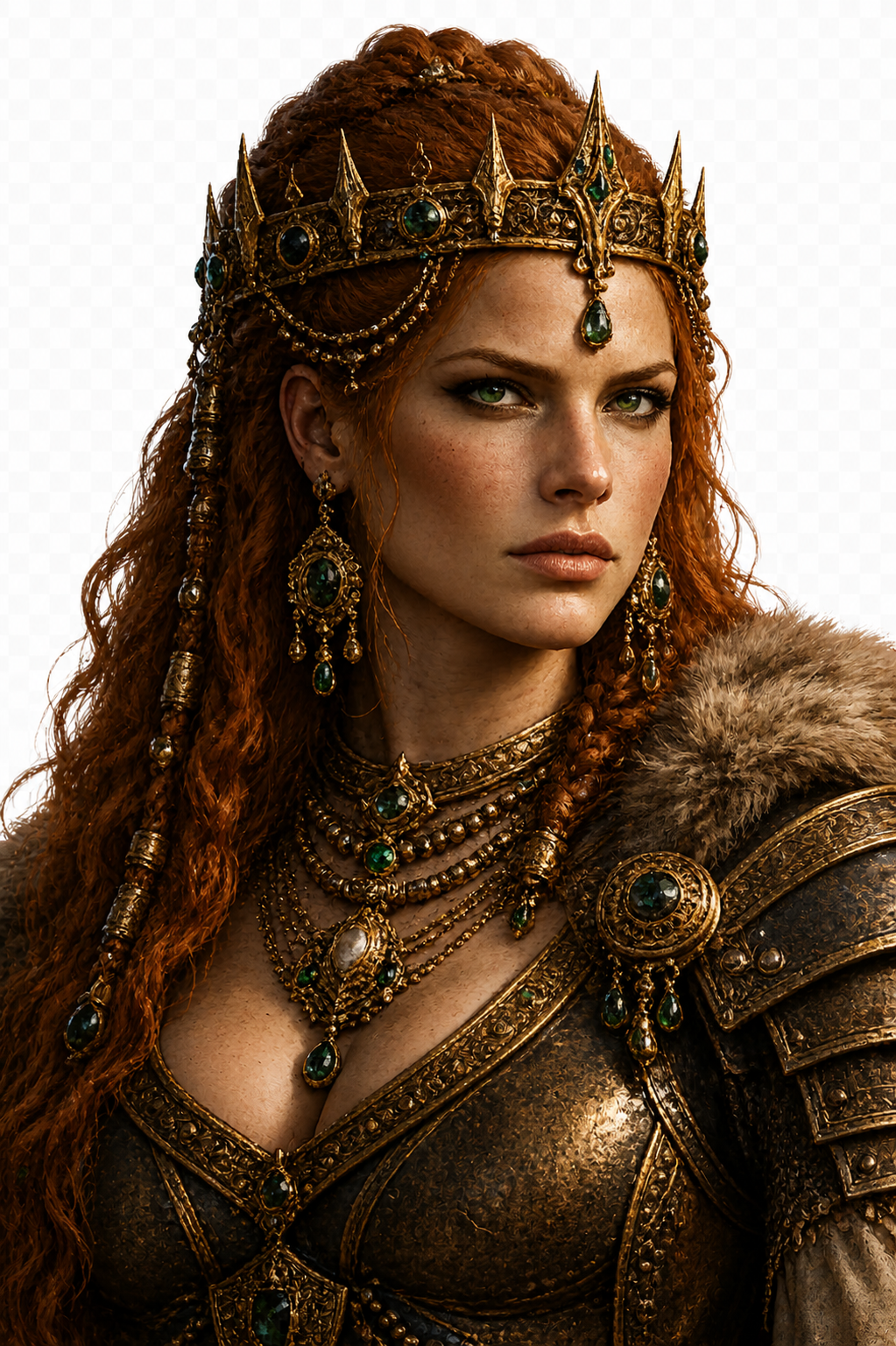
Amage was a legendary Sarmatian queen who ruled in the 2nd century BCE on the shores of the Black Sea. According to historical accounts, she took the reins of power from her husband, who was incapacitated by alcoholism and luxury. Amage was famous for her incredible physical stamina and military decisiveness. On one occasion, she reportedly rode 120 miles in a single day with a small escort to surprise and kill a Scythian king who was threatening her allies. She embodies the historical reality of the 'Amazon' archetype found in Sarmatian culture, where women often held high status and participated in warfare. Her depiction is that of a fierce, wind-swept rider with leather armor and a recurve bow, representing the untamed freedom and lethal skill of the steppe women.
Skill bonus do kataraktfow
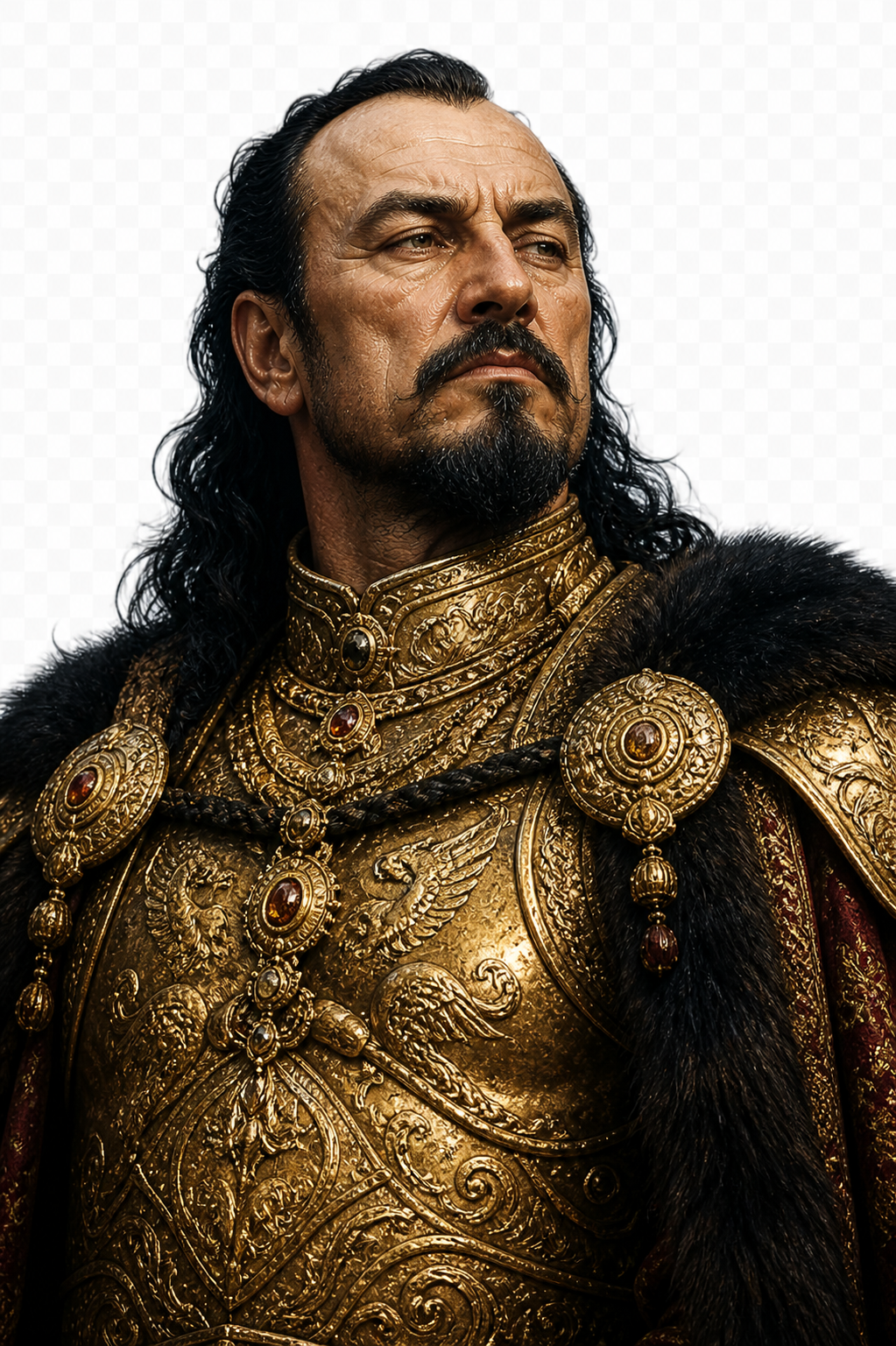
Rasparaganus was a king of the Roxolani Sarmatians who ruled during the early 2nd century CE. He was a contemporary of Emperor Hadrian and is known for negotiating a significant increase in the subsidies Rome paid to his tribe to maintain peace along the Danube frontier. Rasparaganus represents the 'Golden Age' of Sarmatian diplomacy, where the tribes were wealthy and powerful enough to command respect—and tribute—from the Roman Empire. He eventually retired to the Roman city of Pola, where his funeral inscription was found, suggesting a life that ended in luxury and integration. His character design emphasizes the wealth of the Sarmatian elite, featuring intricate gold jewelry, fine silks imported via the Silk Road, and a calm, confident expression of a man who successfully bartered for his people's prosperity.
Skill bonus do tych 1 wojownikow
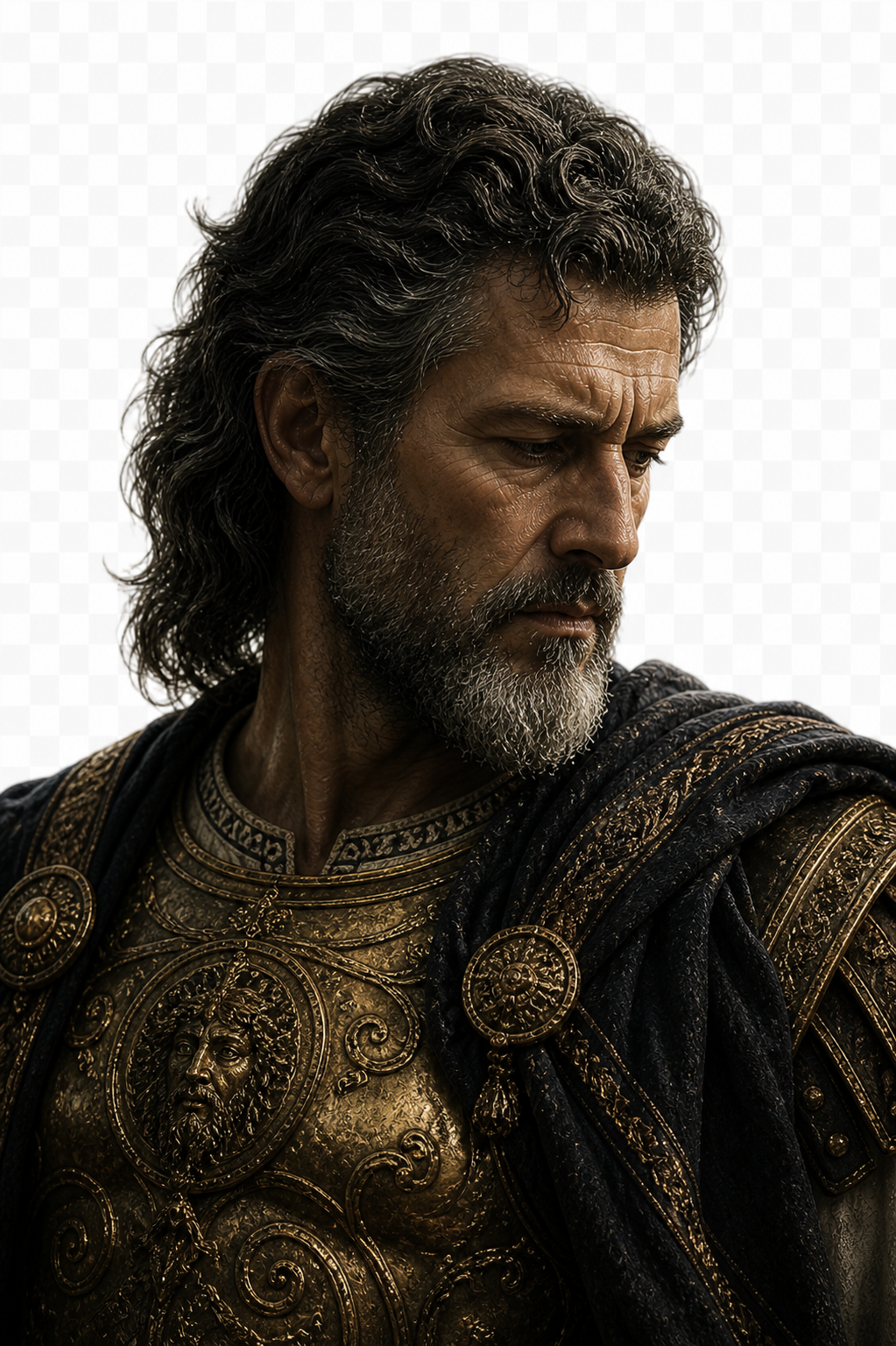
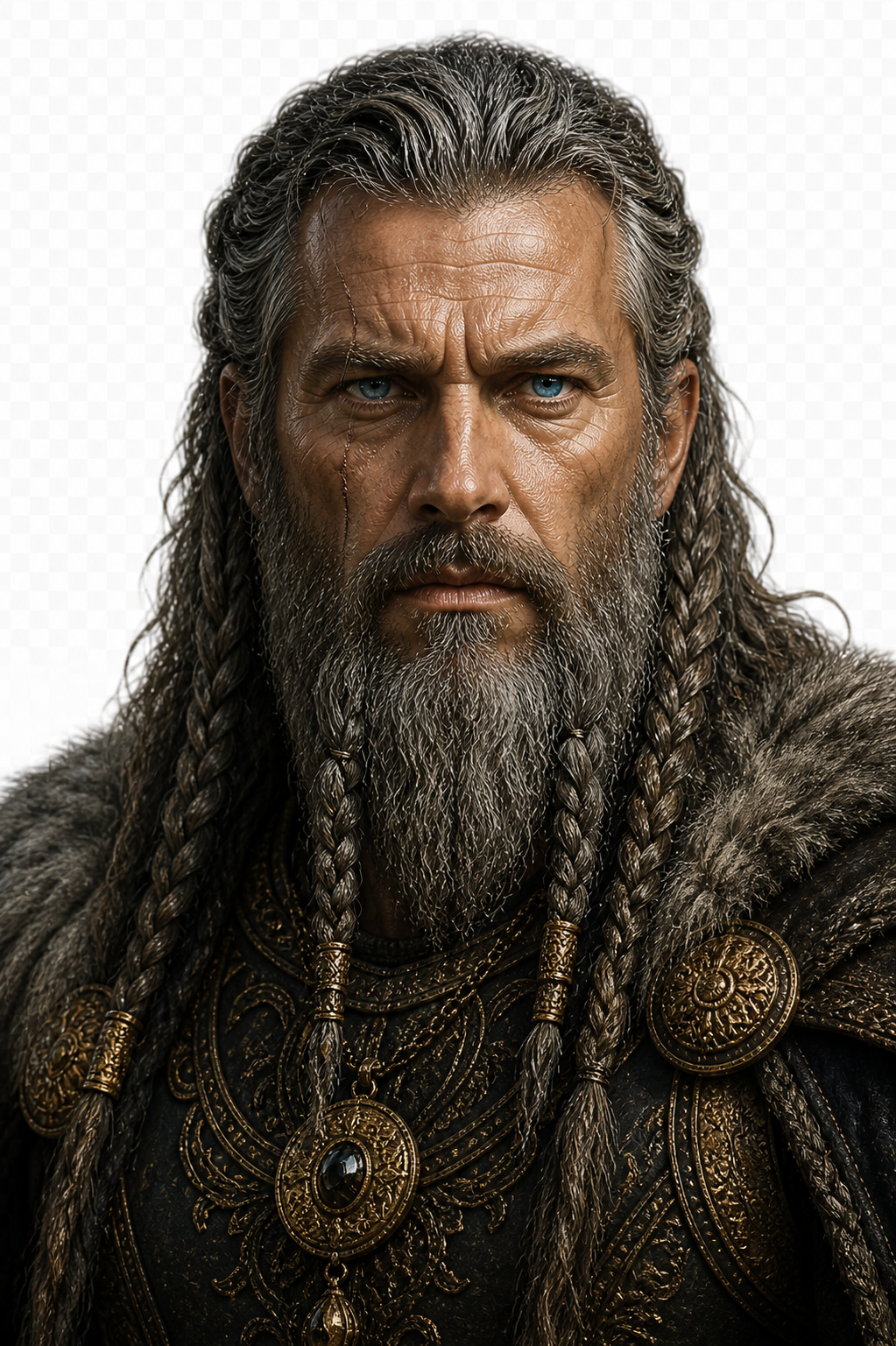
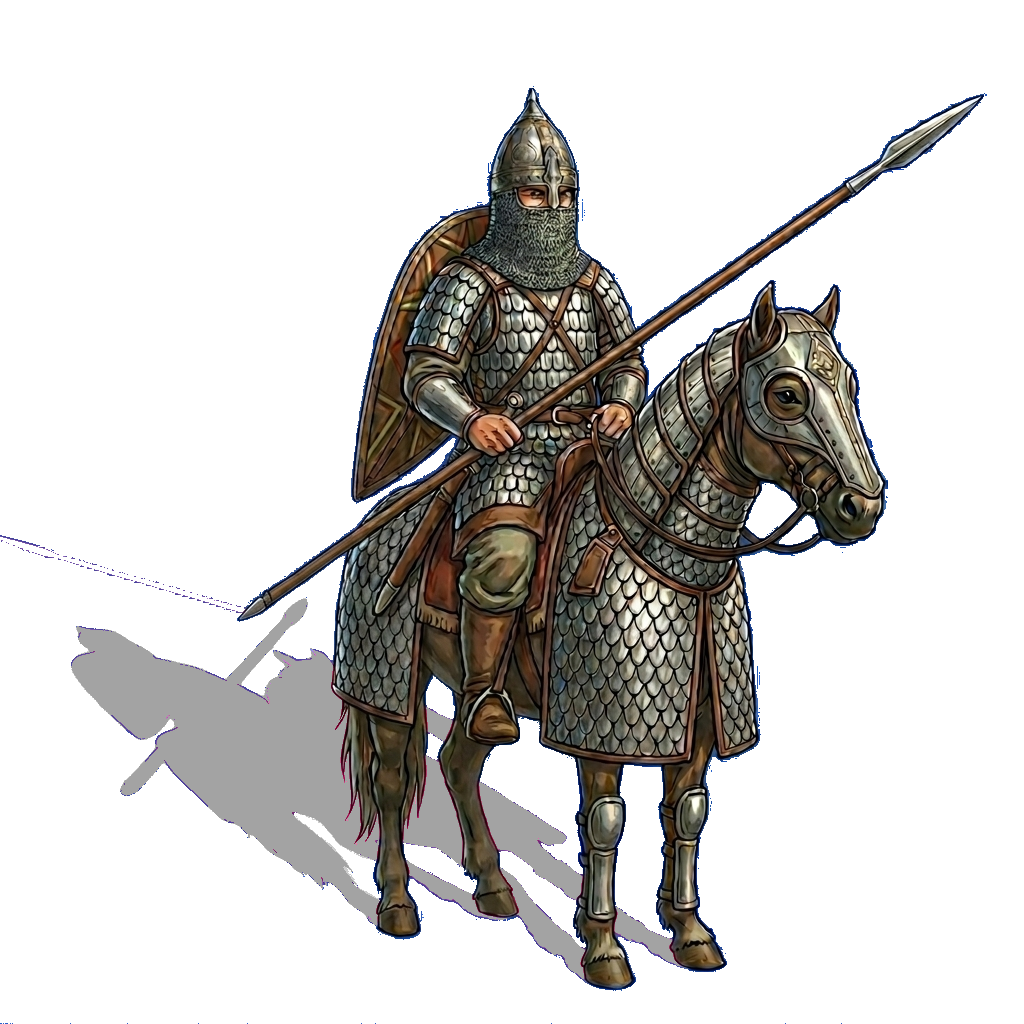
Zanticus was a king of the Iazyges who led his people during the Marcomannic Wars against the Roman Empire. He was a central figure in the fierce battles that took place on the frozen Danube, where Sarmatian cavalry fought Roman infantry in brutal, unconventional conditions. Following the defeat of the Iazyges, Zanticus was forced to provide 8,000 cavalrymen to the Roman army, 5,500 of whom were sent to serve on Hadrian's Wall in Britain. Zanticus represents the defiant, warrior-king archetype of the steppes—hardened by a life in the saddle and the constant struggle for territory. His visual style is defined by heavy iron scale armor, a conical helmet, and the weary, iron-grey features of a king who witnessed the end of his people's absolute independence at the hands of Rome.

 1
1 4
4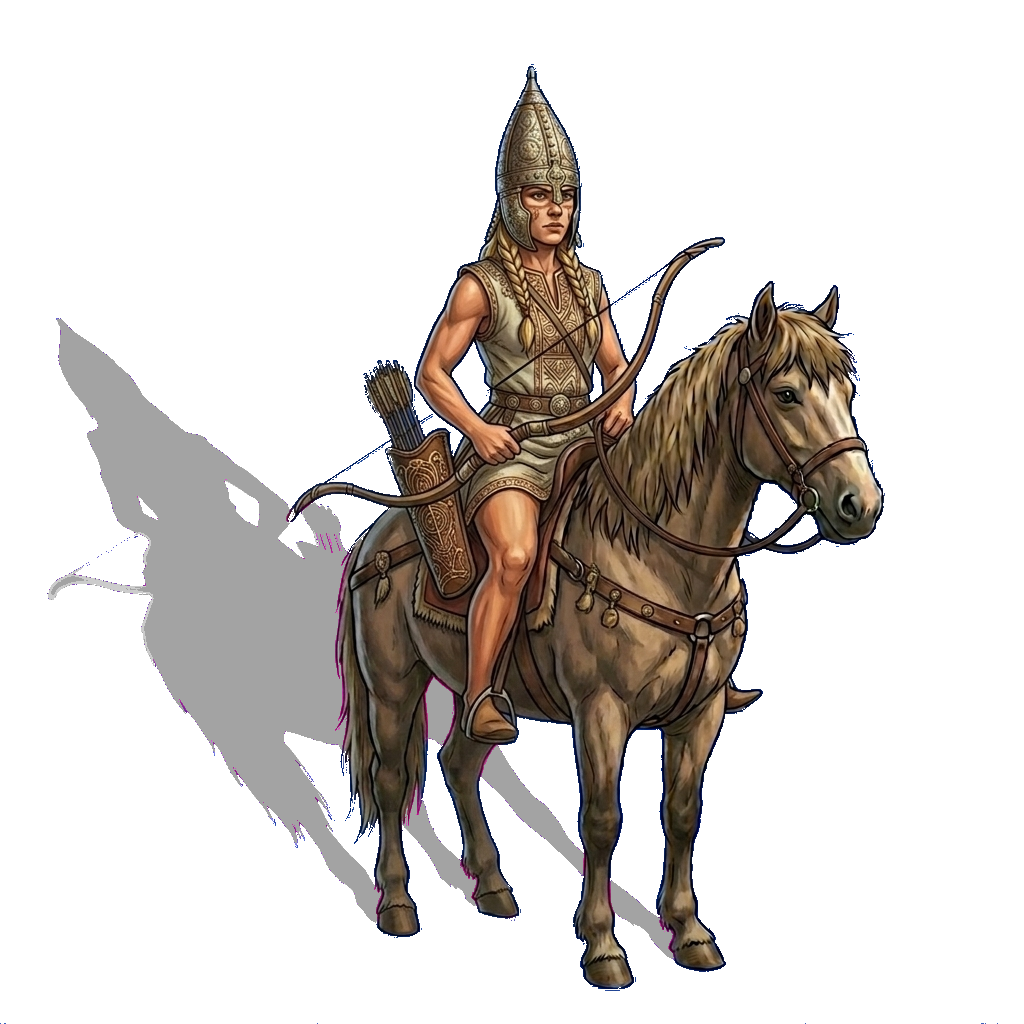
 5
5 3
3
 3
3 10
10