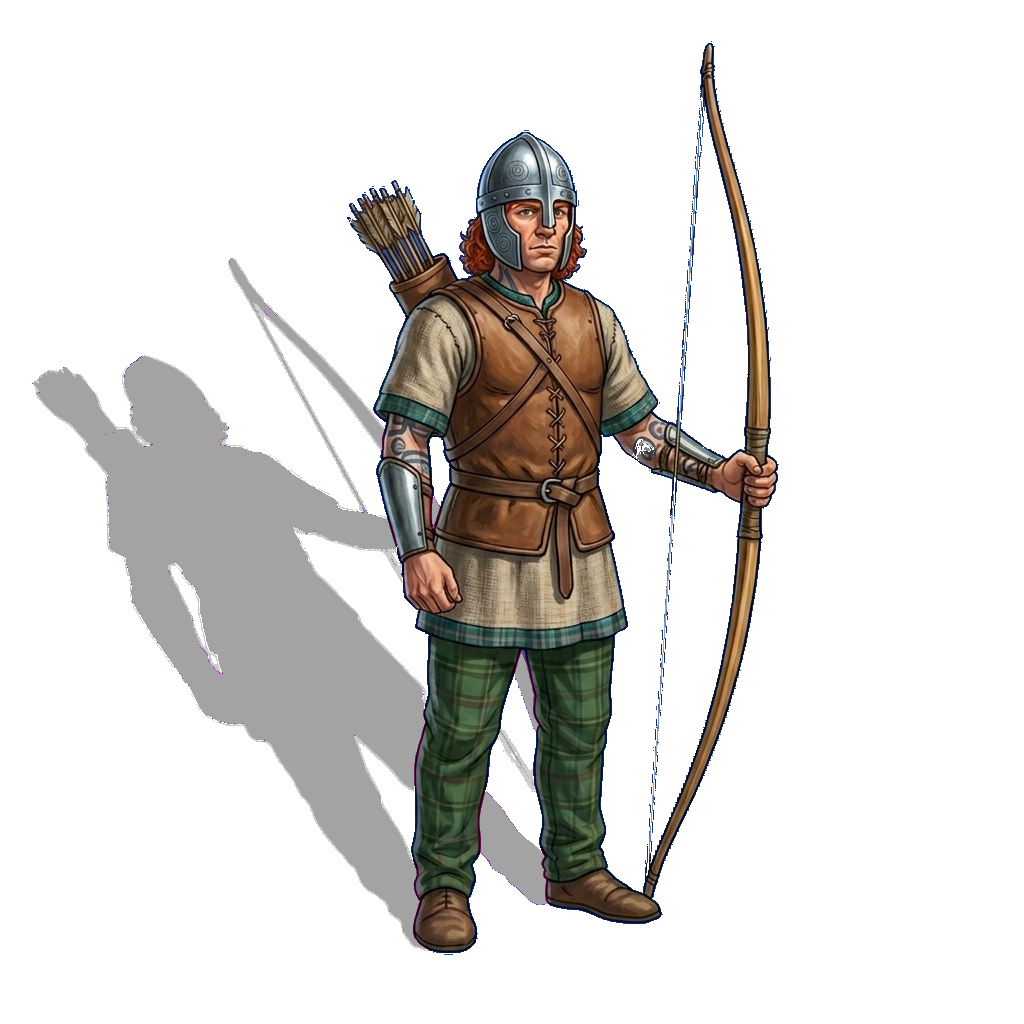
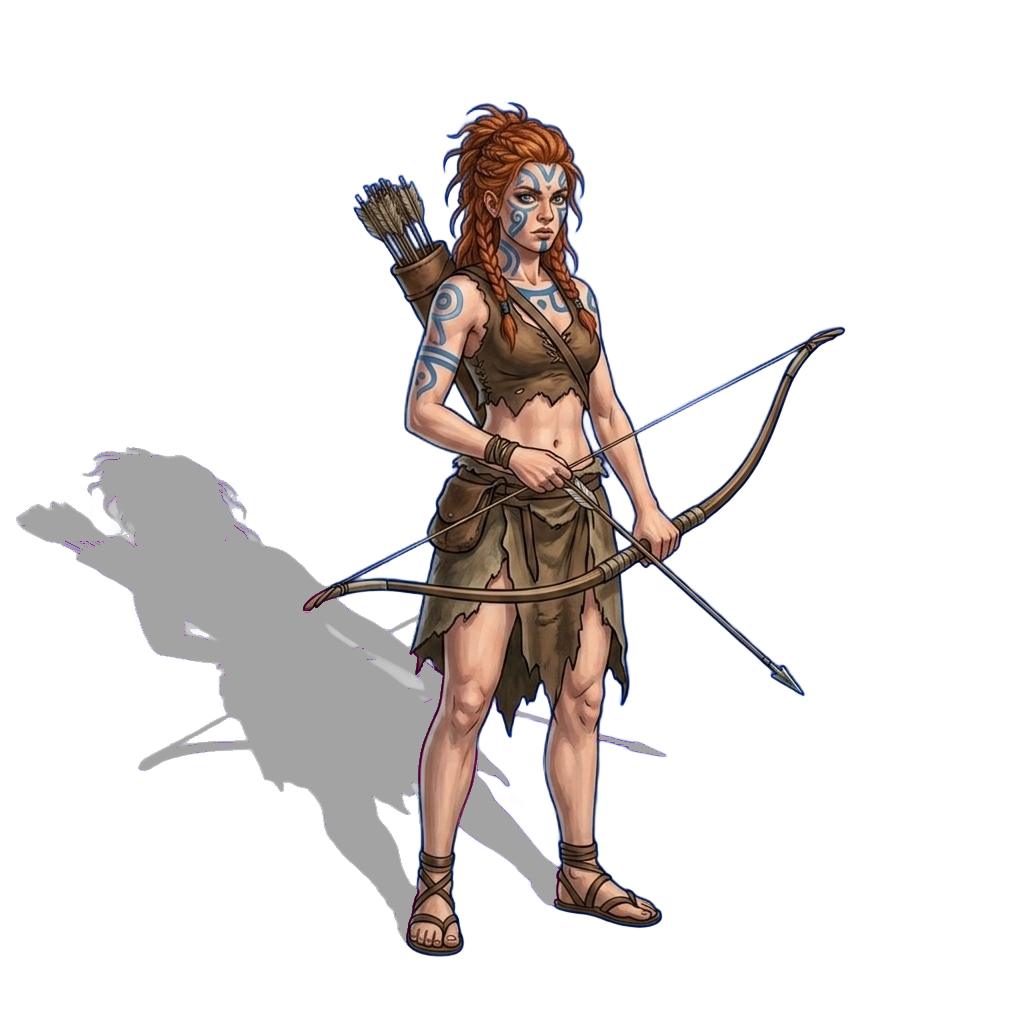
Skill bonus do luczniczek
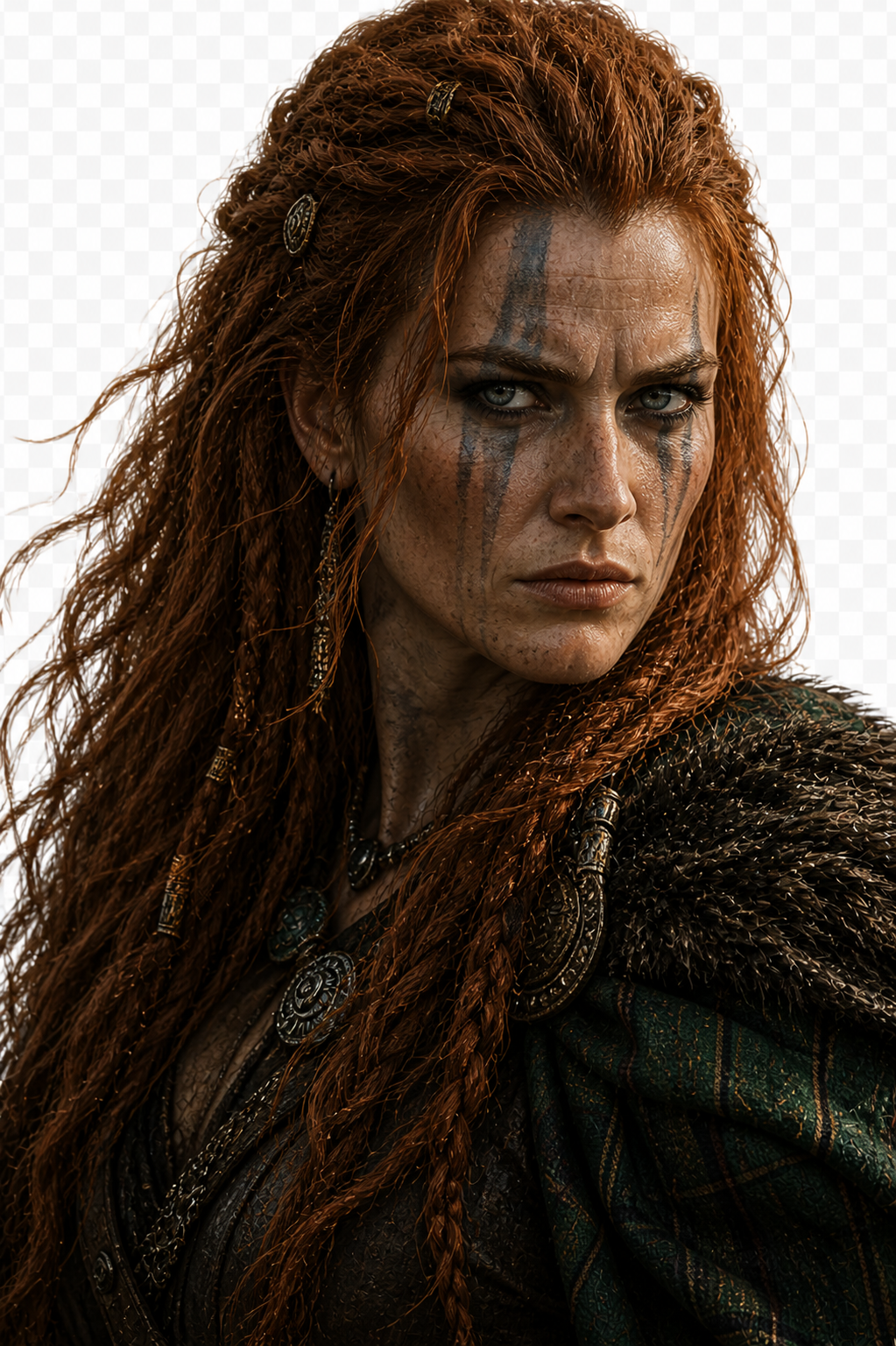
Boudica was the warrior queen of the Iceni tribe who led a massive uprising against the occupying forces of the Roman Empire in 60-61 CE. After the Romans flogged her and raped her daughters following the death of her husband Prasutagus, she united several British tribes in a quest for vengeance. Her armies destroyed Camulodunum, Londinium, and Verulamium, nearly forcing the Romans to abandon Britain altogether. Boudica is described by Roman historians as having a terrifying appearance, with tawny hair reaching her waist and a harsh voice. She represents the fierce resistance of the indigenous Britons against foreign subjugation. Clad in a colorful tunic and a thick gold torc, she stands as a powerful symbol of British independence and the lethal cost of Roman arrogance in the northern provinces.
Skill bonus do drudiow sam byl krolem-kaplanem
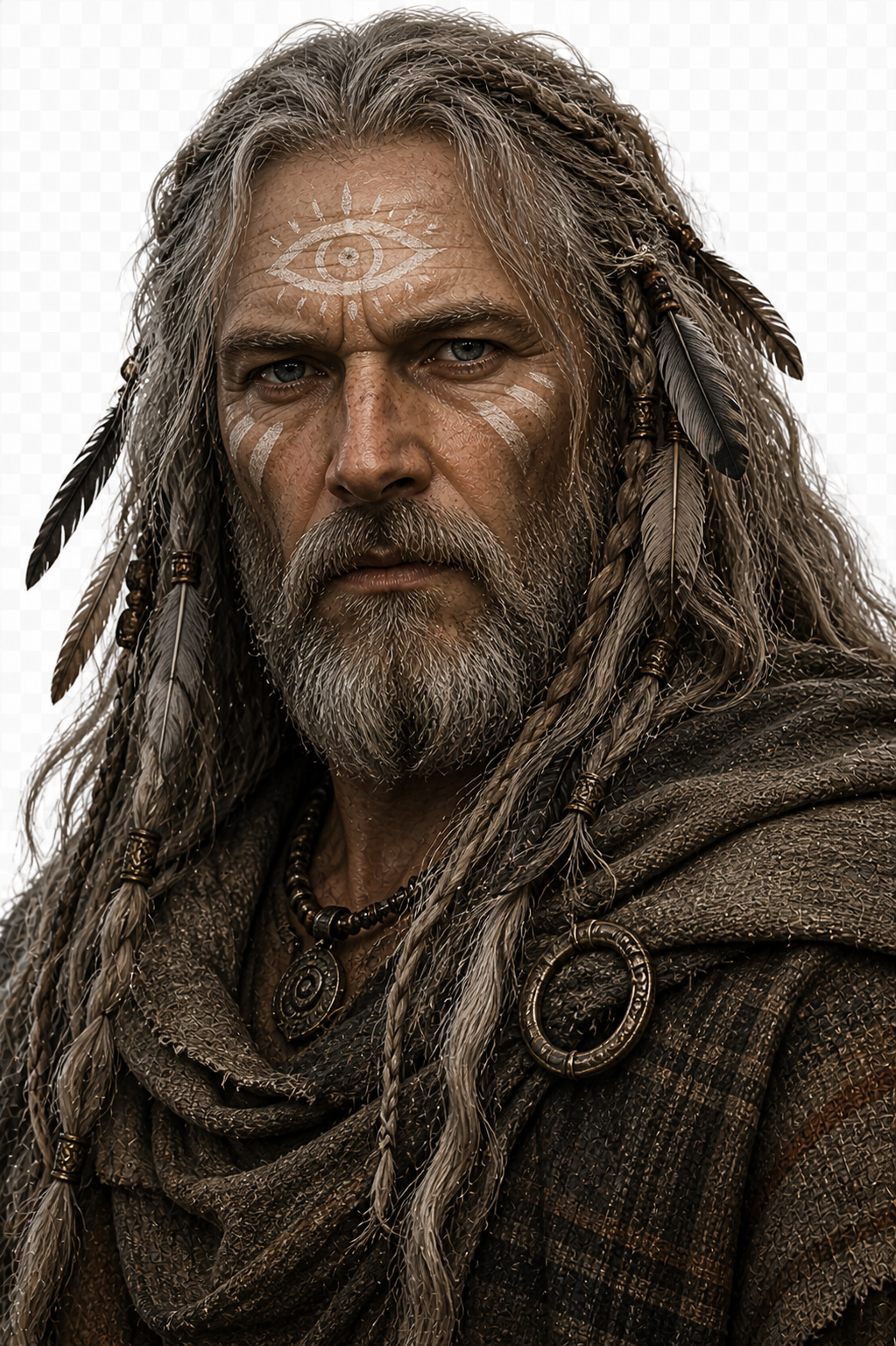
Feth, or Fidach, is a figure found in the early Pictish King Lists and legendary genealogies of the northern tribes. He is often associated with the foundation of the seven legendary provinces of Pictland (Alba), where his name appears as one of the ancestral figures of the Pictish people. In the context of the year 300 CE, Feth represents the transition from mythical tribal progenitors to the historical rulers of the Caledonian confederacy. As a 'Priest-King' figure, he embodies the spiritual connection the Picts held with their land and the old gods of the forests and mountains. His visual depiction focuses on the mystical aspects of Pictish culture, featuring intricate blue woad tattoos, druidic ornaments, and a gaze that reflects the ancient, untamed wilderness of the Scottish Highlands before the arrival of Christianity.
Skill moze uzywac rzymskiej armi bez strat morali itd...
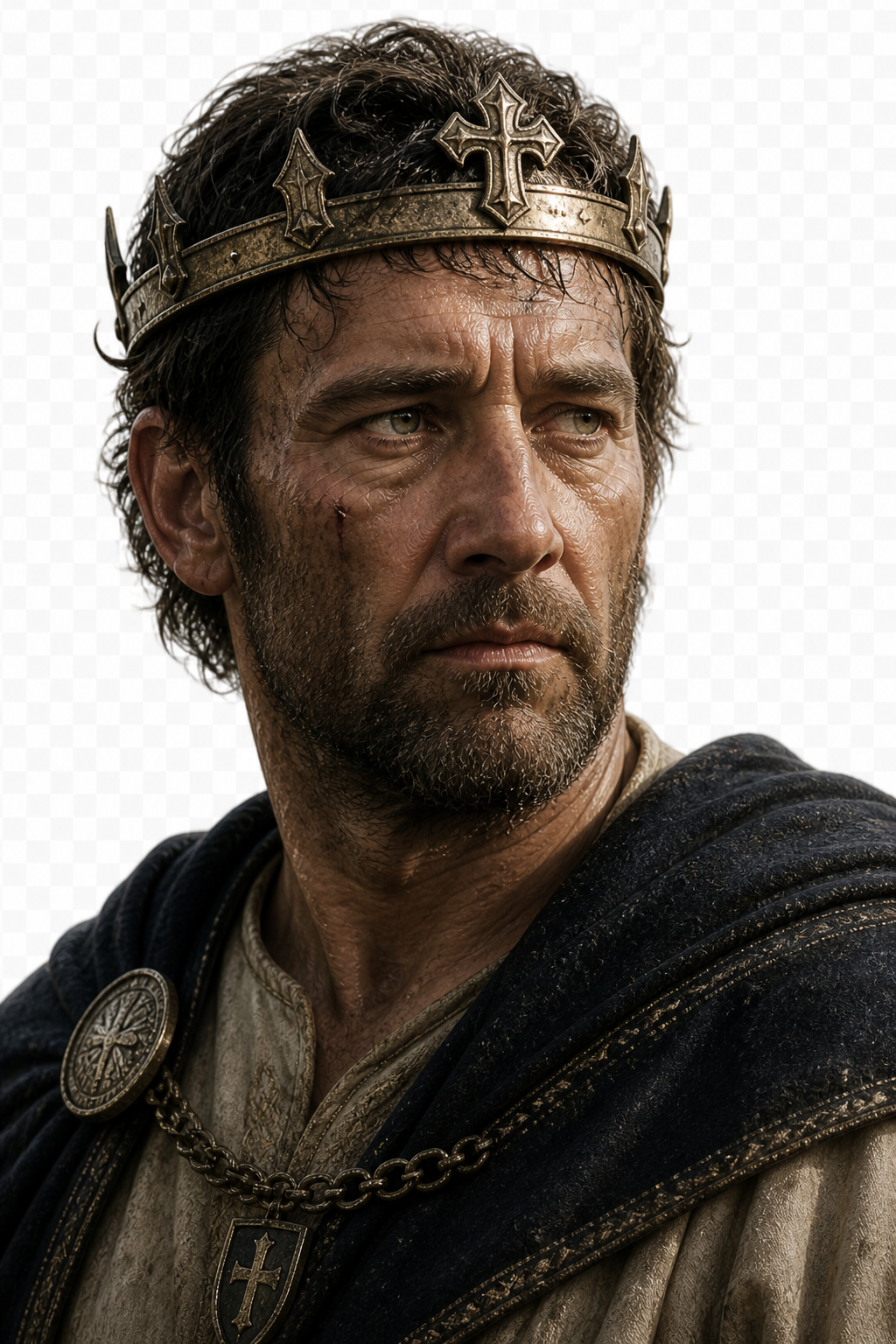
The historical King Arthur is often interpreted as a Romano-British leader, or 'Dux Bellorum,' who spearheaded the defense of Britain against Saxon invaders around 500 CE. Far from the medieval knight in shining armor, this Arthur would have been a rugged warlord utilizing late-Roman military tactics and cavalry to maintain order in a crumbling province. His story bridges the gap between the Roman era and the early Middle Ages. He represents the desperate struggle to preserve a civilized way of life amidst the chaos of the Great Migrations. In a historical setting, Arthur is depicted wearing scale armor, a heavy wool cloak fastened by a Celtic brooch, and carrying a spatha sword. He is a weary but resolute commander, symbolizing the last light of Roman Britain fading into the legends of the Dark Ages.
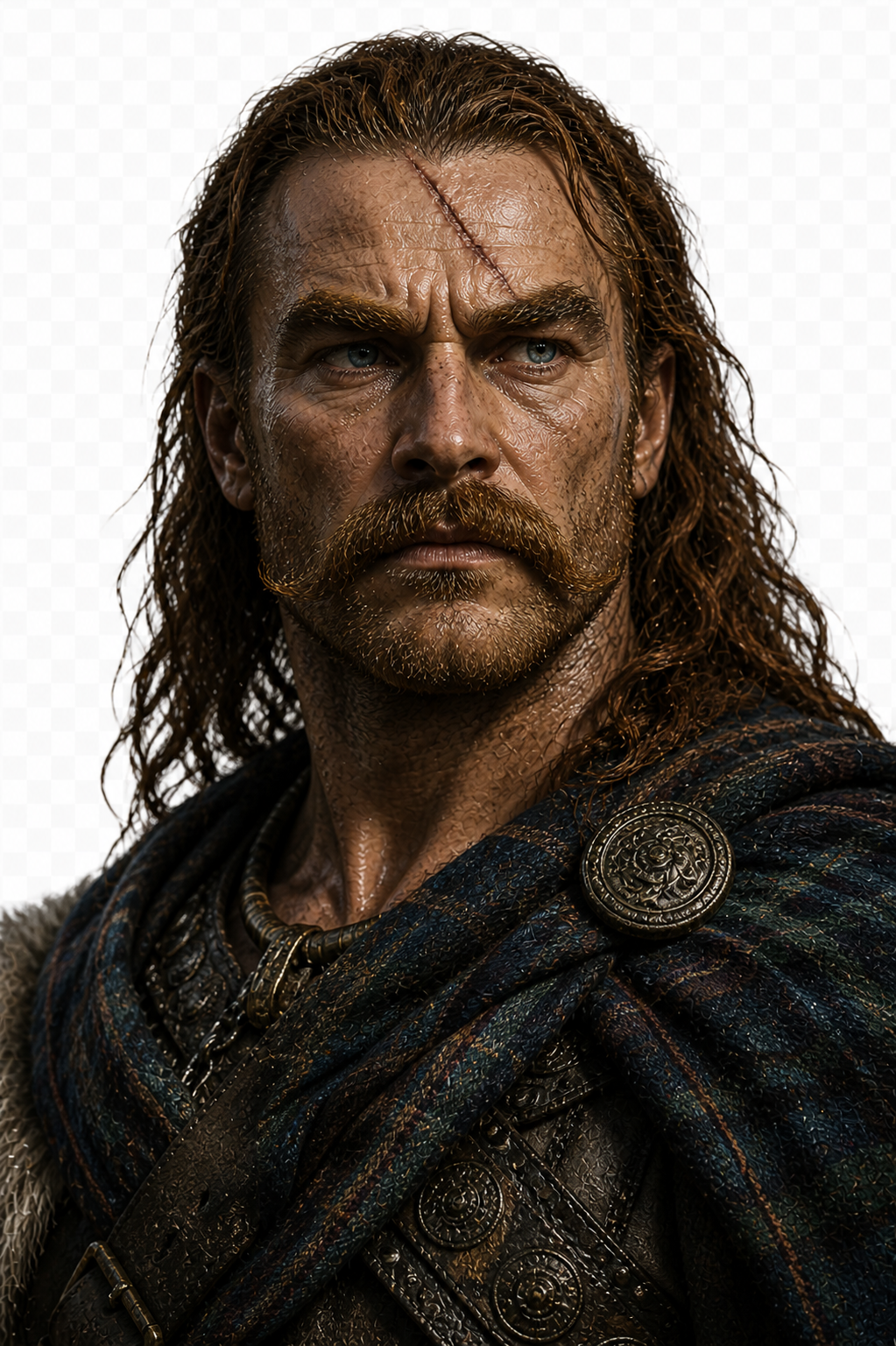
Caratacus was a British chieftain of the Catuvellauni tribe who led the most significant resistance against the Roman conquest of Britain in the 1st century CE. For nine years, he utilized clever guerrilla warfare and the treacherous terrain of Wales to frustrate the Roman legions. After his eventual betrayal and capture, he was brought to Rome in chains. His dignified speech before Emperor Claudius—questioning why a city so wealthy would covet the humble tents of the Britons—was so moving that he was granted clemency. Caratacus remains a hero of British history, representing the untameable spirit of the tribes. He is often portrayed with the characteristic long mustache of the Celts and a battle-hardened face, personifying the noble resistance of the island's indigenous warriors against the overwhelming might of the Mediterranean empire.
Skill bonus do stawiania tych pulapek w ziemi
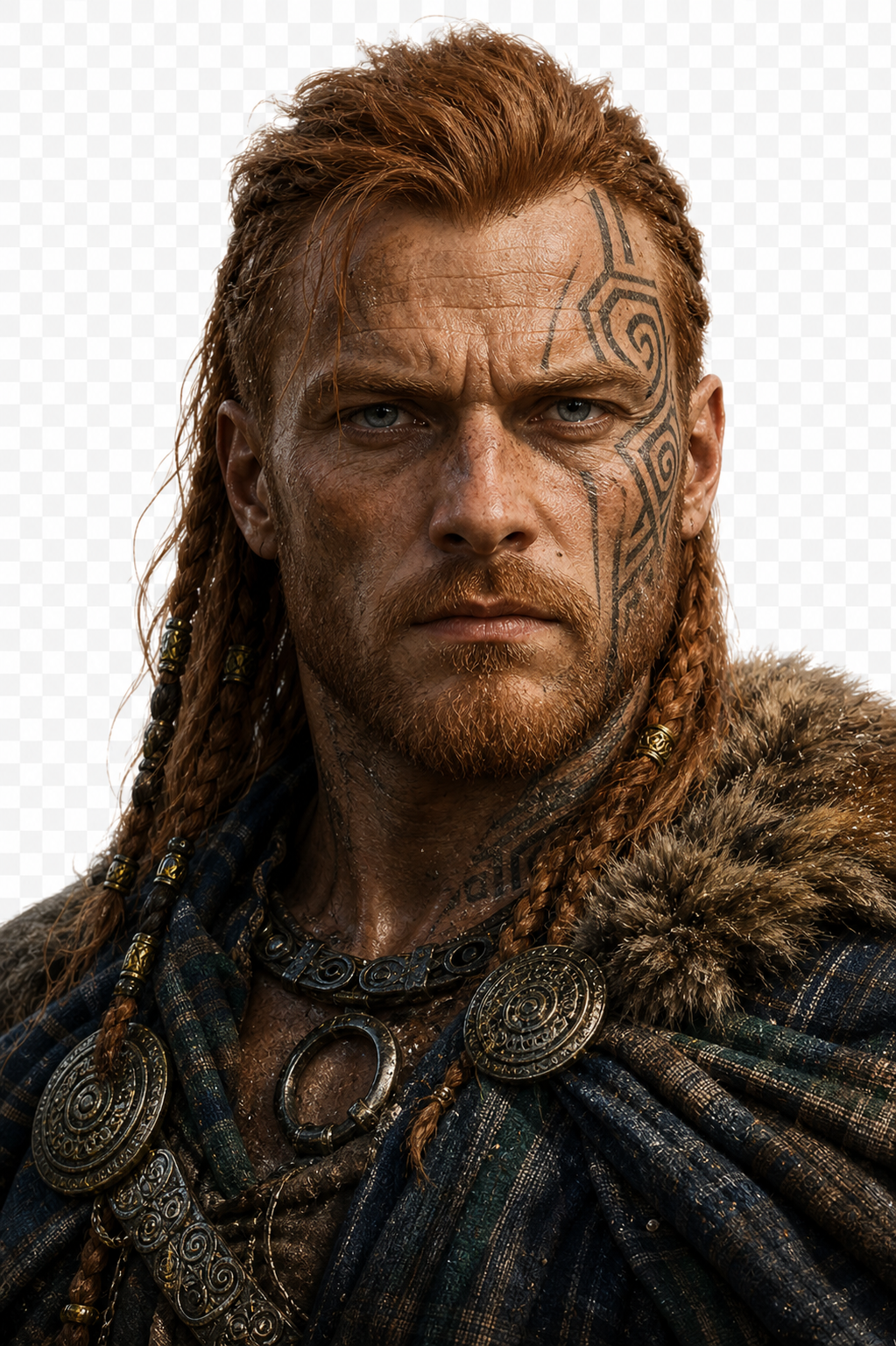
Gartnait I is a semi-legendary king from the Pictish King Lists, traditionally associated with the era when the Picts began consolidating their power in northern Scotland. His name is synonymous with the 'Builders' of the Pictish nation, a period marked by the construction of defensive hillforts and the early development of the unique Pictish stone symbols. As a ruler, Gartnait would have focused on tribal cohesion and the fortification of the northern territories against both Roman incursions and southern British tribes. His character is designed to reflect technical precision and cold, strategic thinking rather than just raw aggression. Visually, he is distinguished by his shorter, practical hair, a focused gaze, and geometric tattoos that suggest a man of order and planning in a world of wild, untamed tribes.
Skill bonus do wojownikow z siekiera
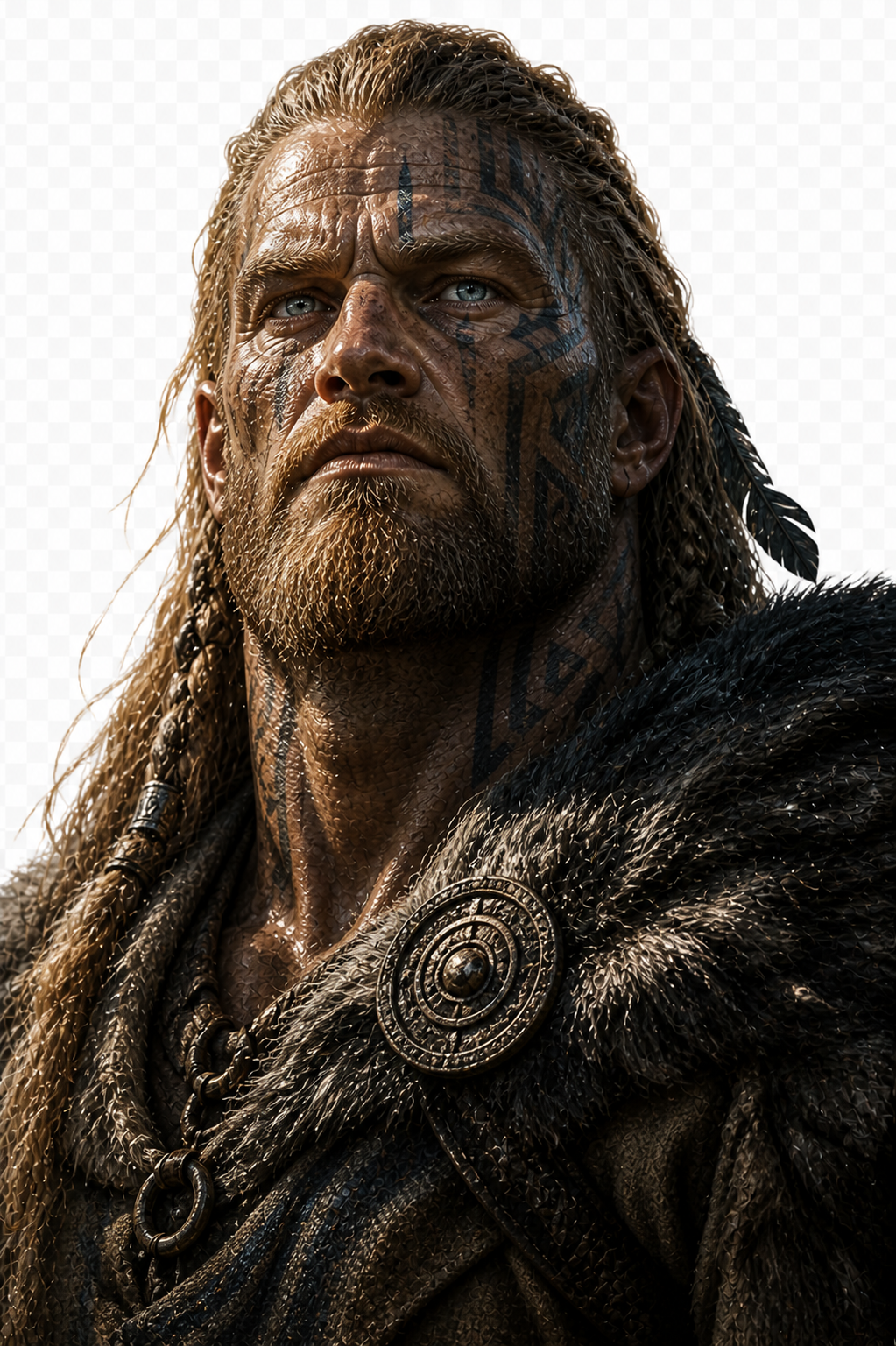
Uen, also known as Ouen, is a figure drawn from the early annals of the Pictish people, representing the northernmost clans who inhabited the mist-shrouded glens and rugged coastlines of Scotland. These clans were the primary source of the 'Picti' name—the 'Painted Ones'—who terrorized the Roman frontier with swift, nocturnal raids. Uen embodies the raw physical power and environmental mastery required to survive in the harsh Caledonian climate. As a guardian of the mountain passes, his authority was based on martial prowess and the ability to navigate the treacherous Grampian peaks. His visual design emphasizes the use of animal furs, such as bear or wolf, and blue-stained woad markings that served as both spiritual protection and psychological warfare, creating the image of a leader who is as unyielding as the granite mountains he calls home.
 20
20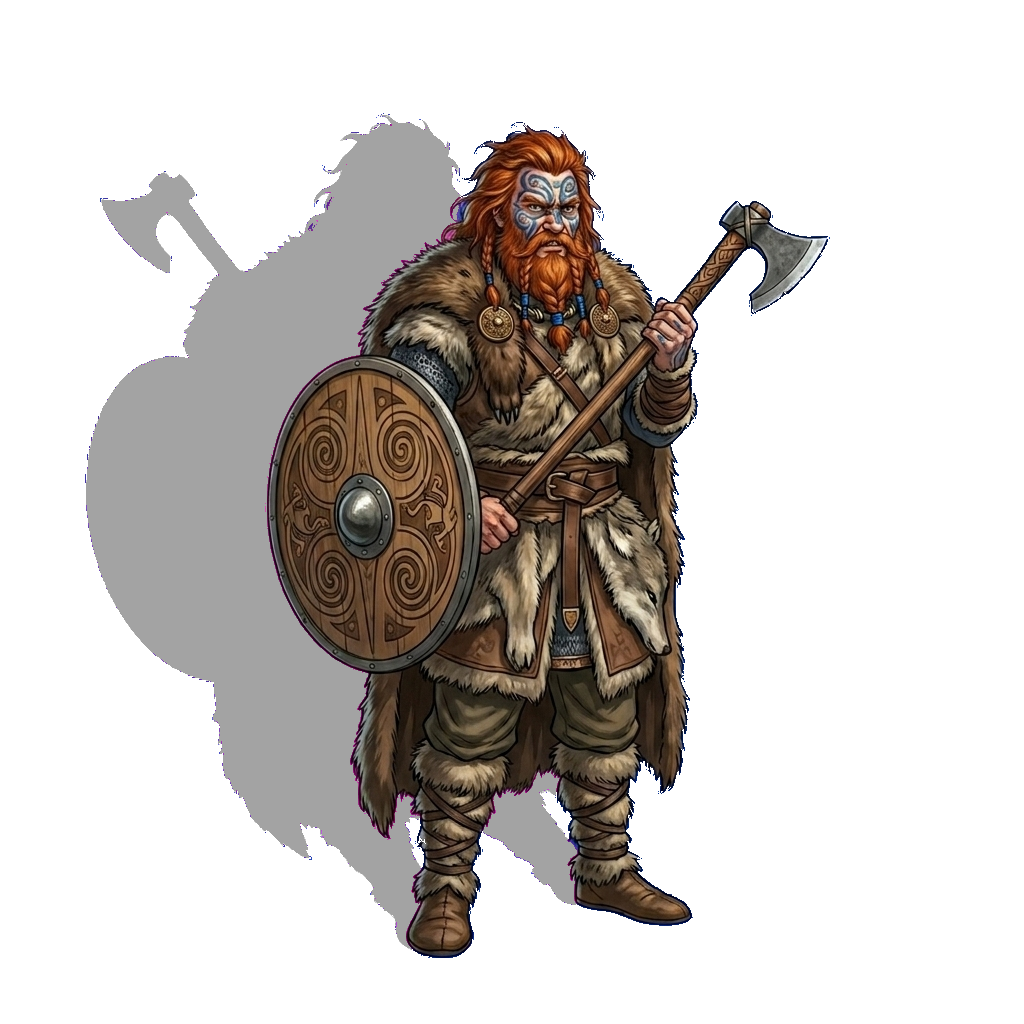
 2
2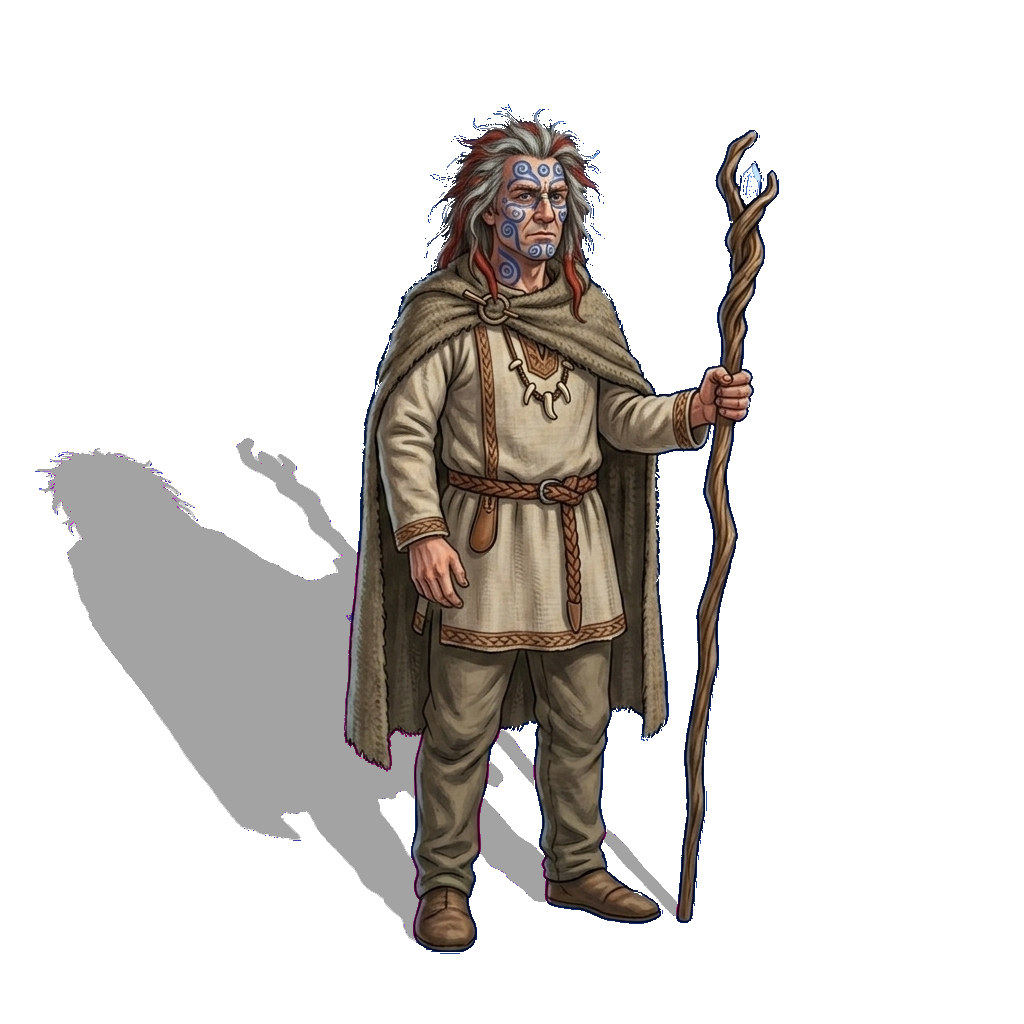
 1
1 1
1 1
1